
Bluemind Thinking

Vision, philosophy, and the future of platform engineering. Exploring why “how” is becoming free, what AI can’t replicate, and what it means to build platforms that last.

the-builder-who-asks-why

The Builder Who Asks Why

The builder who asks “why” isn’t a new invention.
Leonardo was one. The cathedral masters were. The architects of Uber’s orchestration layer are.
What’s new is the stakes.
When platforms become infrastructure for entire economies — when your architecture determines what’s possible for millions of people you’ll never meet — the “why” extends beyond anything you can see.
This is building at a different scale. Not just products. Not just platforms. Possibility infrastructure.

The Builder Who Asks Why Read More »

where-judgment-lives-in-code

Where Judgment Lives in Code

Philosophy is cheap.
Everyone claims to ask “why.” Every pitch deck mentions vision. Every engineering team says they care about the user.
Then the sprint starts. Deadlines arrive. The backlog expands. And somewhere between the vision and the velocity, the “why” gets lost.
Or does it?
Here’s what we’ve learned across nineteen years of building platforms: the “why” doesn’t disappear when implementation begins.
It embeds. In architecture. In feature decisions. In what you refuse to build. In the thousand small choices that no specification could capture.
The question isn’t whether judgment lives in your code.
It’s whose judgment. And whether anyone is paying attention.

Where Judgment Lives in Code Read More »

what-the-gp-sees-that-the-surgeon-misses

What the GP Sees That the Surgeon Misses

The patient arrives with a persistent rash.
The dermatologist examines it carefully. Considers the pattern, the texture, the distribution. Autoimmune possibilities come to mind. A biopsy is scheduled. Bloodwork ordered.
The general practitioner asks a different question.
“Changed anything recently? New detergent? Different soap?”
New laundry detergent. Three weeks ago. Switch back, rash clears.
The dermatologist wasn’t wrong. The dermatologist was narrow.

What the GP Sees That the Surgeon Misses Read More »

why ai makes a perfect cook but never a chef

Why AI Makes a Perfect Cook (But Never a Chef)

A cook follows recipes. A chef creates them.
This isn’t a hierarchy of skill. It’s a difference in kind.
The cook’s job is execution. Measure precisely. Time accurately. Follow the steps. Reproduce the dish exactly as specified. Consistency is the virtue. Deviation is the failure.
The chef’s job is creation. Know why the dish exists. Understand what occasion it serves, what memory it evokes, what human need it meets. Then bring the technical skill to realize that vision.
AI is becoming the greatest cook in history.
It will never be a chef.

Why AI Makes a Perfect Cook (But Never a Chef) Read More »

aerial view of a vibrant river delta with intricate patterns

The Platforms That Actually Work

Uber owns no cars.
Airbnb owns no hotels. Alibaba owns no inventory. The most valuable platforms in the world own almost none of the assets that flow through them.
This isn’t a business model trick. It’s a revelation about what platforms actually are.
The platforms that work don’t just serve users. They create ecosystems. They become invisible infrastructure on which entire economies run — economies that couldn’t exist without them.
This is platform thinking at its highest level. And it’s the difference between building a product and building a possibility.

The Platforms That Actually Work Read More »

what-happens-when-building-costs-nothing

What Happens When Building Costs Nothing?

Five years ago, that feature would have taken a quarter.
Your team would have scoped it, debated it, staffed it. Sprints would have been allocated. Dependencies mapped. Someone would have argued about priorities. Someone else would have defended the existing roadmap.
Now it ships in a week. Sometimes a day. Sometimes before lunch.
You’ve felt this. Your teams have felt it. The distance between idea and implementation is collapsing. Code that once required seniority now flows from prompts. Prototypes that once demanded specialists now emerge from conversations with machines.
This is the promise. And the promise is real.
But here’s what nobody’s talking about: when building costs nothing, everything gets built.
Every idea. Every whim. Every solution to problems that don’t exist.
The filter is disappearing. What’s rushing through the gap isn’t just innovation.

What Happens When Building Costs Nothing? Read More »

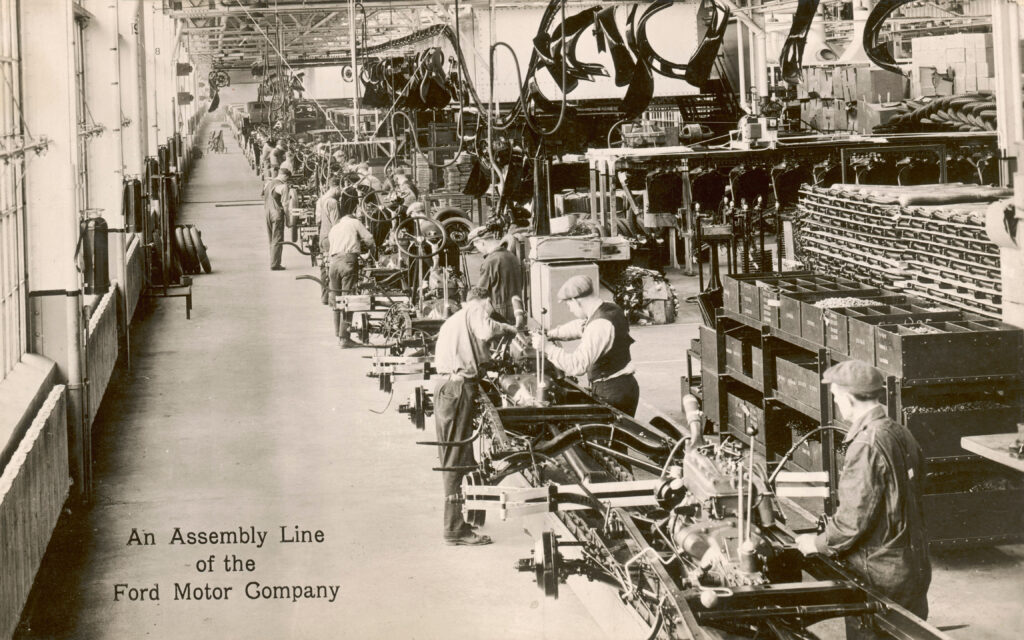
assembly line for cars, ford motor company, usa. date: circa 1920s

The Deal That’s Expiring

Depth was your moat. AI is draining it.
Your grandfather could learn a trade at eighteen and retire with a gold watch at sixty-five.
The knowledge that made him valuable on day one was still valuable four decades later. He went deep. He mastered his domain. The world rewarded that mastery with stability, respect, and a predictable path.
That was the deal.
Go narrow. Go deep. The world will stay still long enough for your expertise to compound. You won’t need to see across domains because your domain will remain relevant. Trust the boundaries. They’ll protect you.
For three generations, the deal held.

The Deal That’s Expiring Read More »

What Did Leonardo Know That We Forgot?

What Did Leonardo Know That We Forgot?

Leonardo da Vinci designed war machines on Monday and painted the Mona Lisa on Tuesday.
He studied anatomy to understand how light falls on flesh, then used that knowledge to engineer hydraulic systems. Artist. Engineer. Scientist. He didn’t pick a lane because the lanes didn’t exist yet.
Somewhere between then and now, we forgot this was possible.
We created disciplines. Built walls between them. Told students to choose: thinker or builder, creative or technical, strategy or execution.
It felt like the natural order of things.
It wasn’t. It was a choice — one that made sense for a while.
But we forgot it was a choice. And that forgetting is costing us more than we realize.

What Did Leonardo Know That We Forgot? Read More »